

December Newsletter 2024
December 5, 2024
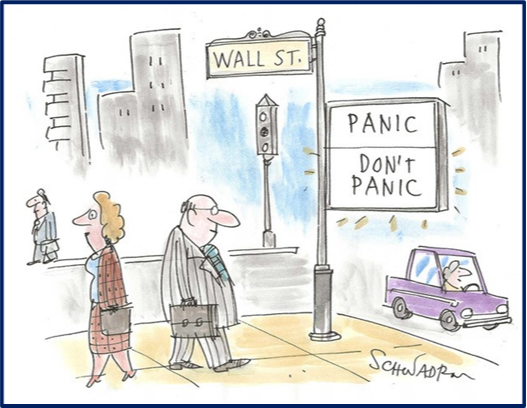
“Wall Street; Don’t Panic.”
Dear Client,
After returning from the Thanksgiving holiday and time spent with family, I am reflecting on all there is to be grateful for; good health, a wonderful family, as well as an incredible team at Intelligent Investment Management to help serve our great clients. I hope that all of you had an opportunity to pause, reflect and appreciate all there is to be thankful for as we walk through the rest of the holiday season.
Turning our attention to client portfolios, we are always mindful of the needs of clients. Our clients in retirement are benefiting from well-managed portfolios that allow them to enjoy their golden years, and we continue to build and grow the portfolios of our working clients to help ensure their secure future.
I want to share some important updates regarding the current financial landscape and what it could mean for your investments in 2025. Wall Street and individual investors are closely monitoring budget imbalances and how this will affect the economy. The U.S. is projected to have a deficit of $1.9 trillion this year, which could exceed six percent of the current GDP; a level reached only during World War II, the 2008 Financial Crisis and the Covid-19 Pandemic. The total public debt at the end of third quarter 2024 was 120.82 percent of the country's gross domestic product, according to the St. Louis Fed Bank. This deficit is driven largely by increased spending on programs such as Social Security and Medicare as well as large allocations to the defense budget and interest on debt. Despite these concerns, stocks are reaching record highs. Since the November election, the market has been on a rally, with nearly $56 billion flowing into U.S. equity funds in just a single week, marking the second-largest inflow for a one-week period since 2008. Many investors are thinking that a new administration will bring with it lower taxes and fewer regulations, which could fuel additional market growth.
However, there are hints of caution in the air, as stocks become more expensive and bond yields remain volatile, which could foretell market uncertainty ahead. While optimism remains high, these factors suggest a more complex economic landscape.
Looking ahead, economists at J.P. Morgan are forecasting a 6.4 percent annualized return for a traditional sixty percent equity and forty percent income portfolio over the next decade. Our sixty/forty portfolio includes alternative equities and alternative income holdings, which we expect will result in a higher annualized return than that projection. Recent surveys show that some financial professionals are more concerned about fiscal debt and global trade risks than inflation, including growing worries about the impact of fiscal policies under a changing administration. As of December 5th, the Atlanta Fed set its real GDP growth forecast to 3.3 percent. As we watch current market activity driven by enthusiasm over a growing economy we continue to “sell high”, to keep our portfolio allocations in line with client investment policy statement guidelines. We will closely monitor economic activity early in 2025 to evaluate our 2025 portfolio expectations and related allocations.
Steve and I are working to finalize any rebalancing and tax-loss harvesting before the end of the year and next month we will be reporting on a very strong 2024 portfolio performance. We will be positioning the aggregate portfolio for concerns over inflation. Based on experience, our alternative equities and alternative income categories and allocation to the domestic equity portfolio are constructed in such a way so that we have a meaningful inflation hedge in the portfolio. As always, we are here to discuss how these developments may affect your portfolio and ensure that your investment strategy aligns with your long-term financial objectives.
As the year ends, retirement planning remains focused on long-term strategies rather than just reducing the current year’s tax bill. Individuals with large IRA balances should evaluate distributions and tax brackets. By staying within favorable federal tax brackets such as a 22% or lower marginal rate, clients with substantial IRA account balances may want to withdraw more than the required minimum distribution (RMD) to help control future tax payments. Additionally, utilizing Roth conversions helps to minimize future tax burdens for the account owner and beneficiaries. Contributions to Roth accounts can ensure tax-free growth and avoid higher taxes later, making this approach an effective long-term solution for building retirement assets. If you are in a lower tax bracket, the key to all good tax planning is to pay taxes at the lowest tax rate allowable and that opportunity should be capitalized on, before yearend. If you have any questions on how to plan for and utilize these strategies, please contact the office. We are working now to update and communicate RMDs to our clients for the upcoming year. It is likely that distributions will increase in 2025.
Schwab sent out a communication this week to all clients. Below are the highlights of this communication.
The FBI has announced that in 2023 impersonation scams resulted in more than 50,000 complaints and $1.3 billion in investor losses, underscoring the importance and necessity of staying vigilant about Cybersecurity.
- Fake websites. Scammers use search engine optimization (SEO) tactics to make fraudulent websites appear at the top of search results. These fake sites look like trusted ones (such as schwab.com) but are designed to capture your login credentials when you attempt to sign in.
- Urgent communications. Fraudsters may contact you via phone, email, text or social media, claiming that an account is at risk. They create a false sense of urgency, pressuring you to act quickly, call a “customer service” number or grant them remote access. These actions can lead to stolen credentials and personal information or to malware being installed on your device.
- Impersonating trustworthy experts. Scammers may pose as legitimate financial advisors or investment professionals. They often use real employee names and job titles, making it seem like you’re in good hands. These offers often come through unsolicited messages promoting “exclusive” investment opportunities.
Please read the following information to see how you can protect yourself from these bad actors.
- Stick to official channels. Avoid clicking links in emails, texts or messaging apps. Access your accounts directly through the official website or mobile app.
- Verify phone numbers. Scammers can spoof legitimate contact numbers. Reach out to the real institution, using verified phone numbers from trusted sources like the official website, your account statement or the number on the back of your credit or debit card.
- Enable two-factor authentication.
- Bookmark official websites. To avoid fake websites in search results, bookmark the official URLs of sites.
- Be skeptical of urgent requests. Fraudsters create a false sense of urgency to rush you into action.
On a brighter note, you may see a new face in our office or see a new name in the e-mails from us. Carly van Beek is our new office operations assistant. She will be working closely with Laura to help with administrative tasks and client service. Feel free to call Carly with any questions about your accounts.
Please feel free to reach out with any questions or to schedule a meeting to review your portfolio. Thank you for your continued trust in our services. We look forward to supporting you in the years ahead, navigating these exciting yet complex times. All of us at Intelligent Investment Management wish you and your family health, happiness and a peaceful holiday.
Sincerely,

Intelligent Investment Management, LLP